

Loading search...
Loading search...
Loading site search...
Loading site search...
Loading site search...
Loading...
Loading site search...
Loading site search...
Posted Today
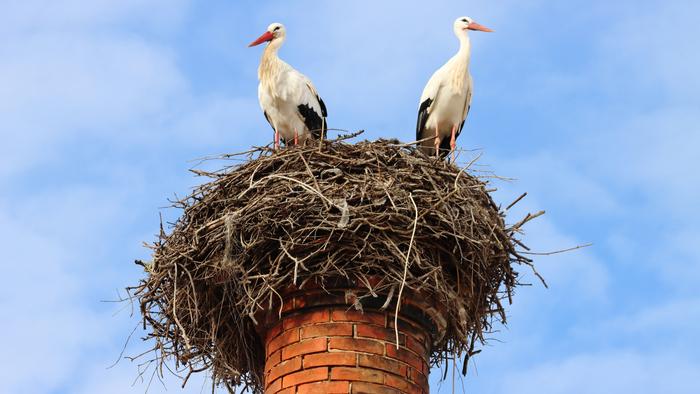
Views on whether an iconic bird lost from Britain in the 15th century should be reintroduced across the country are being sought by an ornithologist and researcher.
Sophie Rabone is looking into the reintroduction of the White Stork, a bird which would have been a well-known sight in many parts of Britain in the Middle Ages – but which vanished in the 1400s.
The birds were lost from the British landscape due to over-hunting, habitat loss and persecution – with debates held in Parliament about eliminating the species after it became associated with rebels in the English Civil War.
However, work is now underway to help the species recover a foothold in the country, and some breeding populations have already been introduced at selected sites.
Now Sophie is looking into the feasibility of a large-scale reintroduction of the birds to the UK – following similar re-introductions elsewhere in Europe – as part of her PhD studies.
She said: “The UK is one of the most nature-depleted countries in the world - and after decades of intensive agriculture, habitat loss and urban expansion, nature has paid a huge price.
“Reintroducing species like the white stork is one piece of reversing that decline.
“As a species historically native to Britain and closely associated with the wetlands and farmland that have suffered most, its return signals a recovering landscape that benefits countless other species alongside it.
“Increasing biodiversity not only has beneficial effects on the natural ecosystem - but also on the human populations that share the space.”
However, such re-introductions are not without challenges for both birds and humans – and Sophie’s work will strive to examine how well the white stork can adapt to different environments and habitats, and also what the public - and environmental stakeholders such as farmers and land managers – think about the reintroduction plans.
Sophie added: “My research considers a situation where white stork became more present in day-to-day life, and is particularly focused on questions such as whether farmers and land managers see the species as a threat, what do the public and stakeholders understand about the species, and what are the most common misconceptions?
“Reintroduction of any species- in this instance the white stork - can only succeed in the long-term if there is genuine support and tolerance behind it.”
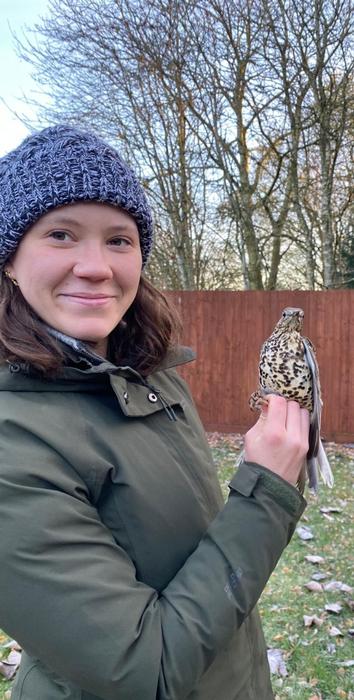
Sophie, from South Staffordshire, took on her PhD after completing an undergraduate Applied Zoology degree at Harper Adams in 2024.
She said: “Studying at Harper Adams has been a really positive experience both throughout my undergraduate degree and into my postgraduate research. I have constantly felt the support of my supervisors and know that my research is well suited to the resources and opportunities available here.
“Harper Adams felt like a natural place to continue my studies given the opportunities and connections that it has to linked organisations and professionals who may be able to contribute to, and help to shape, my research.
“My interest and prior experience in the field of ornithology played a big role in drawing me to the PhD topic, along with species recovery and reintroductions becoming more talked-about within conservation practices and among the wider public- so I felt this PhD could have a real impact in the coming years.”
Farmers, landowners, and members of the public interested in giving their views on White Stork reintroduction simply need to complete a short survey to take part – which can be found by visiting:


We use cookies to ensure that we give you the best experience on our website. If you continue without changing your settings, we'll assume that you are happy to receive all cookies on the website. However, you can change your cookie settings at any time.